Convolutional Neural Networks for Image Recognition
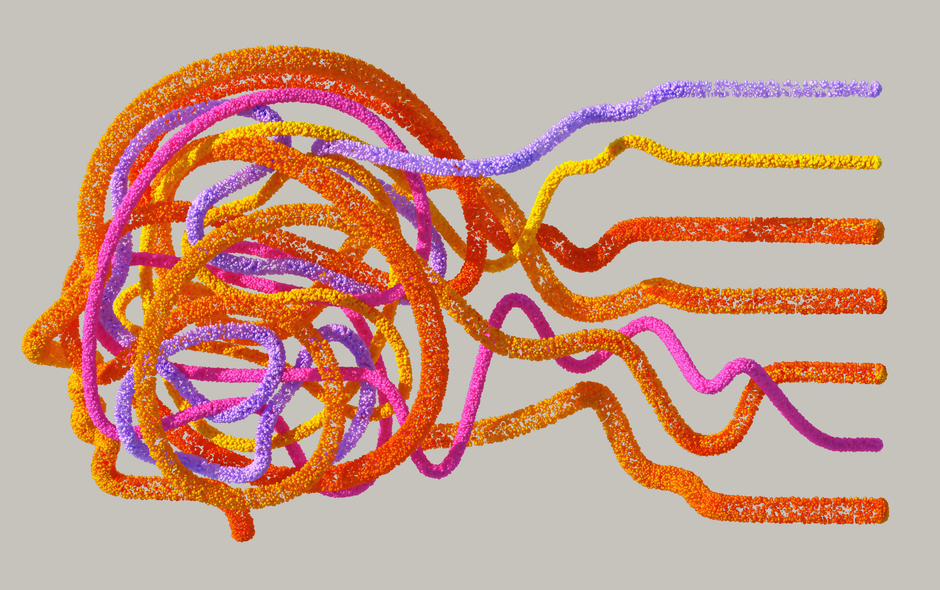
Convolutional Neural Networks (CNNs) have become a foundational approach in computer vision, enabling machines to interpret visual information with remarkable proficiency. Their design is inspired by the biological processes of the visual cortex, where neurons respond to specific stimuli in receptive fields. This architecture allows CNNs to automatically and adaptively learn spatial hierarchies of features from input images, ranging from simple edges to complex objects. In this article, we explore the core components of CNNs and the mechanisms by which they extract features for classification tasks, providing a comprehensive overview suitable for those seeking to understand this pivotal technology.
The proliferation of digital imagery has made automated image recognition increasingly important across domains such as healthcare, autonomous vehicles, and security. CNNs stand out due to their ability to learn directly from raw pixel data, eliminating the need for manual feature engineering. This capability stems from their unique structure, which includes convolutional layers, pooling layers, and fully connected layers. Each layer plays a distinct role in transforming the input into a representation that can be used for classification. By delving into these layers and their operations, we can appreciate how CNNs achieve their effectiveness.
Neural Insights, as a company dedicated to advancing machine learning, recognizes the significance of understanding CNN architectures. This article aims to provide a detailed explanation of how CNNs process images, from initial convolution to final classification. We will discuss the mathematical underpinnings, the role of activation functions, and the importance of training with backpropagation. Whether you are a student, researcher, or practitioner, this overview will equip you with a solid grasp of the fundamental principles behind CNNs for image recognition.
Architecture of Convolutional Neural Networks
The architecture of a CNN is characterized by a sequence of layers that progressively reduce the spatial dimensions of the input while increasing the depth of feature maps. The primary building block is the convolutional layer, which applies a set of learnable filters (kernels) to the input. Each filter slides across the input spatially, computing dot products between its weights and the input values, resulting in a 2D activation map. This process enables the network to detect local patterns such as edges, corners, and textures. By stacking multiple convolutional layers, the network can learn hierarchical features, where earlier layers capture low-level details and deeper layers capture high-level semantics.
Following convolutional layers, pooling layers are often inserted to reduce the spatial resolution of the feature maps. Max pooling, for instance, selects the maximum value within a region, providing translation invariance and reducing computational load. This downsampling helps the network focus on the most salient features and reduces the risk of overfitting. The alternation between convolutional and pooling layers allows the network to build increasingly abstract representations while maintaining a manageable number of parameters.
After several convolutional and pooling stages, the resulting feature maps are flattened into a one-dimensional vector and fed into fully connected layers. These layers perform high-level reasoning by combining features from all spatial locations. The final layer typically uses a softmax activation to output a probability distribution over classes. The entire architecture is trained end-to-end using backpropagation and an optimization algorithm such as stochastic gradient descent, adjusting the filters and weights to minimize the classification error.
Variants of this basic architecture include networks with different depths, filter sizes, and connectivity patterns. For example, residual networks introduce skip connections to facilitate training of very deep models. Inception modules use multiple filter sizes in parallel to capture multi-scale features. The choice of architecture depends on the specific task, dataset, and computational resources, but the underlying principles of convolution, pooling, and full connectivity remain central.
Feature Extraction Process in CNNs
Feature extraction in CNNs is the process of transforming raw pixel values into meaningful representations that can be used for classification. At the heart of this process is the convolution operation, which detects local patterns by applying filters. Each filter is a small matrix of weights that is convolved with the input image. The result is a feature map that indicates the presence and intensity of the pattern at each spatial location. Through training, the network learns filters that are sensitive to specific visual elements, such as vertical edges, color blobs, or complex shapes.
As the input propagates through the network, the features become increasingly abstract and invariant to transformations. Early layers respond to simple features like edges and corners, while deeper layers combine these to form parts of objects and eventually whole objects. This hierarchical feature learning is a key advantage of CNNs, as it automates the discovery of relevant features without human intervention. The depth of the network determines the level of abstraction; deeper networks can capture more complex patterns but require more data and computation to train.
The feature extraction process is also influenced by the receptive field of neurons. The receptive field is the region of the input space that affects a particular neuron’s output. In CNNs, the receptive field grows with depth, allowing deeper neurons to integrate information from larger portions of the image. This enables the network to consider context and relationships between distant pixels. Moreover, techniques such as padding and stride control the spatial dimensions of feature maps and the overlap between receptive fields, affecting the granularity of feature extraction.
Pooling layers complement convolution by summarizing features within local regions, which enhances translation invariance and reduces the sensitivity to small shifts and distortions. This is particularly useful for recognition tasks where the exact position of an object may vary. However, pooling also discards some spatial information, which can be detrimental for tasks requiring precise localization. Therefore, modern architectures sometimes use pooling sparingly or replace it with strided convolutions to retain more spatial detail.
Classification Tasks and Training Considerations
Once features are extracted, CNNs perform classification by mapping the learned representations to a set of predefined categories. The fully connected layers at the end of the network act as a classifier, taking the flattened feature vector and producing scores for each class. During training, the network adjusts its weights to minimize a loss function, typically cross-entropy for classification. This process requires a labeled dataset and sufficient computational resources. The performance of the model depends on various factors, including the quality and quantity of data, the architecture design, and the choice of hyperparameters.
Training a CNN involves several considerations to ensure effective learning. Data preprocessing, such as normalization and augmentation, can improve generalization by exposing the network to varied examples. Regularization techniques like dropout and weight decay help prevent overfitting, especially when data is limited. The optimization algorithm and learning rate schedule also play crucial roles in convergence. Additionally, transfer learning allows leveraging pre-trained models on large datasets, which can be beneficial when target data is scarce.
Evaluation of classification performance is typically done using metrics such as accuracy, precision, recall, and F1-score. It is important to use a separate validation set to tune hyperparameters and a test set to assess final performance. Cross-validation can provide more robust estimates. However, it is essential to note that no single architecture or training strategy guarantees optimal results for all tasks; the effectiveness depends on the specific problem and data characteristics.
In practice, CNNs have achieved notable success in image recognition challenges, but their deployment requires careful consideration of ethical, computational, and practical constraints. For instance, bias in training data can lead to unfair outcomes, and large models may be impractical for real-time applications. Therefore, ongoing research focuses on efficient architectures, explainability, and robustness. Neural Insights contributes to these advancements by developing tools and frameworks that support responsible AI development.
Advanced Techniques and Variations
Beyond the basic CNN, numerous variations have been developed to address specific challenges in image recognition. One notable advancement is the use of residual connections, which enable the training of very deep networks by mitigating the vanishing gradient problem. Another is the attention mechanism, which allows the network to focus on relevant parts of the image dynamically. These innovations have led to state-of-the-art performance in tasks such as object detection and segmentation.
Another area of active research is the design of efficient CNNs for mobile and embedded devices. Techniques such as depthwise separable convolutions and pruning reduce the number of parameters and computations, making real-time inference feasible. Knowledge distillation, where a smaller model learns from a larger one, also helps in deploying compact models without significant loss in accuracy. These approaches are particularly relevant in applications where latency and power consumption are critical.
Furthermore, the integration of CNNs with other modalities, such as text and audio, has led to multimodal learning systems. For example, in image captioning, CNNs extract visual features that are then used by recurrent neural networks to generate descriptions. Such systems demonstrate the versatility of CNNs as feature extractors. However, combining modalities introduces additional complexity in training and requires careful alignment of representations.
Despite their successes, CNNs are not without limitations. They can be sensitive to adversarial attacks, where small perturbations in the input lead to incorrect classifications. They also require substantial labeled data for training, which may be expensive or impractical to obtain in some domains. Ongoing research aims to address these issues through techniques like adversarial training, semi-supervised learning, and self-supervised learning.
Conclusion
Convolutional Neural Networks have revolutionized image recognition by providing a powerful framework for automatic feature extraction and classification. Their architecture, built on convolutional and pooling layers, enables the learning of hierarchical representations that capture both low-level and high-level visual patterns. While training CNNs involves careful consideration of data, architecture, and hyperparameters, their flexibility and effectiveness have made them a cornerstone of modern computer vision.
As the field continues to evolve, new techniques and variations are likely to further enhance the capabilities of CNNs. Understanding the fundamental principles discussed here provides a solid foundation for exploring advanced topics and applying CNNs to real-world problems. Neural Insights remains committed to advancing knowledge and tools in this domain, supporting practitioners and researchers in their endeavors.