Reinforcement Learning in Robotics
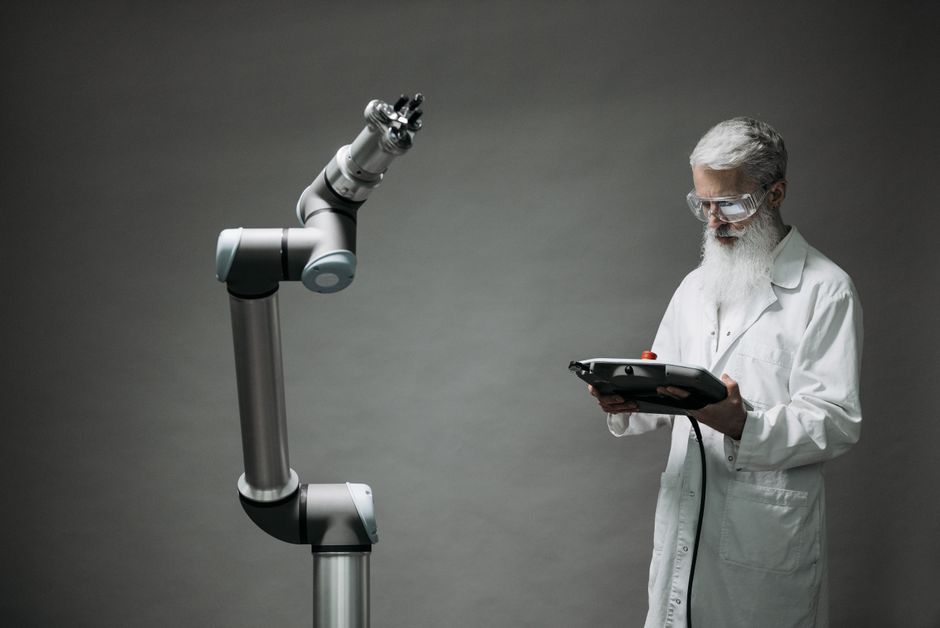
Reinforcement learning (RL) has emerged as a powerful paradigm in robotics, offering a framework for robots to acquire complex skills through interaction with their environment. Unlike traditional control methods that rely on explicit programming, RL allows a robot to learn from trial and error, optimizing its behavior based on rewards and penalties. This approach is particularly valuable in scenarios where the dynamics are difficult to model or the task requirements are ambiguous.
In recent years, the integration of RL with simulated environments has accelerated progress, enabling robots to practice millions of episodes safely and efficiently before deployment in the physical world. By leveraging simulation, researchers and engineers can explore a vast space of behaviors without risking hardware damage or human safety. This article examines the core concepts of RL in robotics, the role of simulation, key algorithms, challenges, and emerging directions.
As the field evolves, the synergy between RL and robotics continues to push the boundaries of what autonomous systems can achieve, from manipulation and locomotion to navigation and human-robot collaboration.
Foundations of Reinforcement Learning in Robotics
At its core, reinforcement learning involves an agent—in this case, a robot—that interacts with an environment to achieve a goal. The agent observes the current state, selects an action, and receives a reward signal that indicates how good or bad that action was. Through repeated interactions, the agent learns a policy that maps states to actions to maximize cumulative reward over time.
In robotics, the state often includes sensor readings such as joint angles, velocities, camera images, and force-torque measurements. Actions correspond to motor commands, such as joint torques or target positions. The reward function is designed to encode the task objective; for example, a robot arm might receive a positive reward for moving an object closer to a target location and a negative reward for dropping it.
Unlike supervised learning, RL does not require labeled examples of optimal behavior. Instead, the robot discovers good policies by exploring the environment and exploiting actions that lead to higher rewards. This exploration-exploitation trade-off is central to RL and presents unique challenges in robotics, where random exploration can be unsafe or inefficient.
Model-free RL methods, such as Q-learning and policy gradients, learn directly from experience without explicitly modeling the environment dynamics. Model-based RL, on the other hand, learns a model of the environment and uses it for planning. Both approaches have been applied to robotic tasks, with trade-offs in sample efficiency and asymptotic performance.
The Role of Simulation in Robot Learning
Simulated environments have become indispensable for training RL agents in robotics. Physics simulators like MuJoCo, PyBullet, and Isaac Sim provide realistic dynamics and fast computation, allowing robots to practice tasks millions of times faster than in the real world. Simulation also enables parallel training across many instances, significantly reducing wall-clock time.
One major advantage of simulation is safety: robots can explore aggressive or risky behaviors without damaging themselves or their surroundings. This is particularly important for tasks like dynamic locomotion, where falls are common during learning. Simulation also allows researchers to systematically vary environmental conditions, such as friction, lighting, and object placement, to improve generalization.
However, a persistent challenge is the reality gap—the discrepancy between simulated and real-world dynamics. Policies trained in simulation often fail when transferred to physical robots due to modeling errors, sensor noise, and unmodeled effects. Techniques like domain randomization, where simulation parameters are randomly varied during training, help bridge this gap by exposing the agent to a wide range of conditions.
Another approach is to use real-world data to fine-tune simulated policies, or to employ sim-to-real transfer methods such as system identification and adaptive control. Companies like Neural Insights have explored hybrid approaches that combine simulation with limited real-world trials to improve robustness.
Key Algorithms and Architectures
Deep reinforcement learning has enabled robots to learn complex tasks directly from high-dimensional sensory inputs, such as images and point clouds. Algorithms like Deep Q-Networks (DQN), Deep Deterministic Policy Gradient (DDPG), and Soft Actor-Critic (SAC) have been successfully applied to robotic manipulation and locomotion.
Policy gradient methods, including Proximal Policy Optimization (PPO) and Trust Region Policy Optimization (TRPO), are popular for continuous control tasks. They directly optimize the policy parameters to maximize expected reward, often using multiple parallel environments to reduce variance. These methods have been used to train robots to walk, run, and manipulate objects with dexterity.
Model-based RL algorithms, such as Model Predictive Control (MPC) combined with learned dynamics models, offer better sample efficiency and can incorporate constraints. For example, a robot can use a learned model to predict the consequences of its actions and plan a safe trajectory. However, model-based methods require accurate models, which can be difficult to obtain in complex environments.
Hierarchical RL architectures decompose complex tasks into simpler subtasks, each with its own policy. This approach mimics the way humans break down problems and has been used for long-horizon tasks like multi-step assembly. By combining low-level motor skills with high-level planning, hierarchical RL can improve learning efficiency and transferability.
Challenges and Limitations
Despite impressive demonstrations, RL in robotics faces several challenges. Sample efficiency remains a major hurdle: learning a single task can require millions of interactions, which is impractical in the real world. Simulation helps, but the reality gap persists. Moreover, designing reward functions that accurately capture the desired behavior is non-trivial; misspecified rewards can lead to unintended behaviors.
Safety and reliability are critical concerns. During learning, a robot may take actions that are dangerous to itself or humans. Safe RL methods aim to incorporate constraints and risk awareness, but ensuring safety in all situations is difficult. Additionally, RL policies often lack interpretability and may fail unpredictably under distribution shift.
Another limitation is the difficulty of generalizing across tasks and environments. A policy trained for one task may not transfer to another without fine-tuning. Multi-task RL and meta-RL aim to address this by learning representations that generalize, but these are still active research areas.
Finally, the computational resources required for training deep RL agents are substantial, often requiring GPUs and large-scale distributed systems. This can limit accessibility for smaller labs and companies.
Future Directions and Applications
Looking ahead, several trends are shaping the future of RL in robotics. One is the integration of RL with large language models and vision-language models, enabling robots to understand high-level instructions and learn from human feedback. This could lead to more intuitive and flexible robot programming.
Another direction is lifelong learning, where robots continuously adapt to new tasks and environments without forgetting previous skills. Techniques like elastic weight consolidation and progressive networks are being explored to mitigate catastrophic forgetting. Lifelong learning is essential for robots that operate in dynamic, unstructured environments.
Sim-to-real transfer will continue to improve through better simulation fidelity, domain adaptation, and hybrid training. Advances in differentiable simulation and neural rendering may further reduce the reality gap, allowing policies to transfer more seamlessly.
Applications of RL in robotics are expanding across industries. In manufacturing, RL is used for adaptive assembly and quality control. In healthcare, it aids in surgical robotics and rehabilitation. In logistics, it optimizes warehouse navigation and picking. As the technology matures, we can expect to see more autonomous systems that learn and improve over time.
Reinforcement learning is not a one-size-fits-all solution; its success depends on careful problem formulation, simulation fidelity, and safety considerations.
In conclusion, reinforcement learning offers a promising path for robots to acquire complex skills through trial and error, particularly when combined with simulated environments. While challenges remain, ongoing research and technological advancements are steadily expanding the capabilities and applicability of RL in robotics. As with any emerging technology, its deployment requires a balanced approach that considers both potential benefits and limitations.